Cultivation + selective irrigation
Teams planted seeds in colour-coded plots and used robots to water seeded plots accurately.
 ☰
☰
The 2025/2026 Robotics for Good Youth Challenge put food security at the centre of a global youth robotics mission. In Uganda, learners moved from workshops and prototypes to a national championship and the global stage in Geneva.
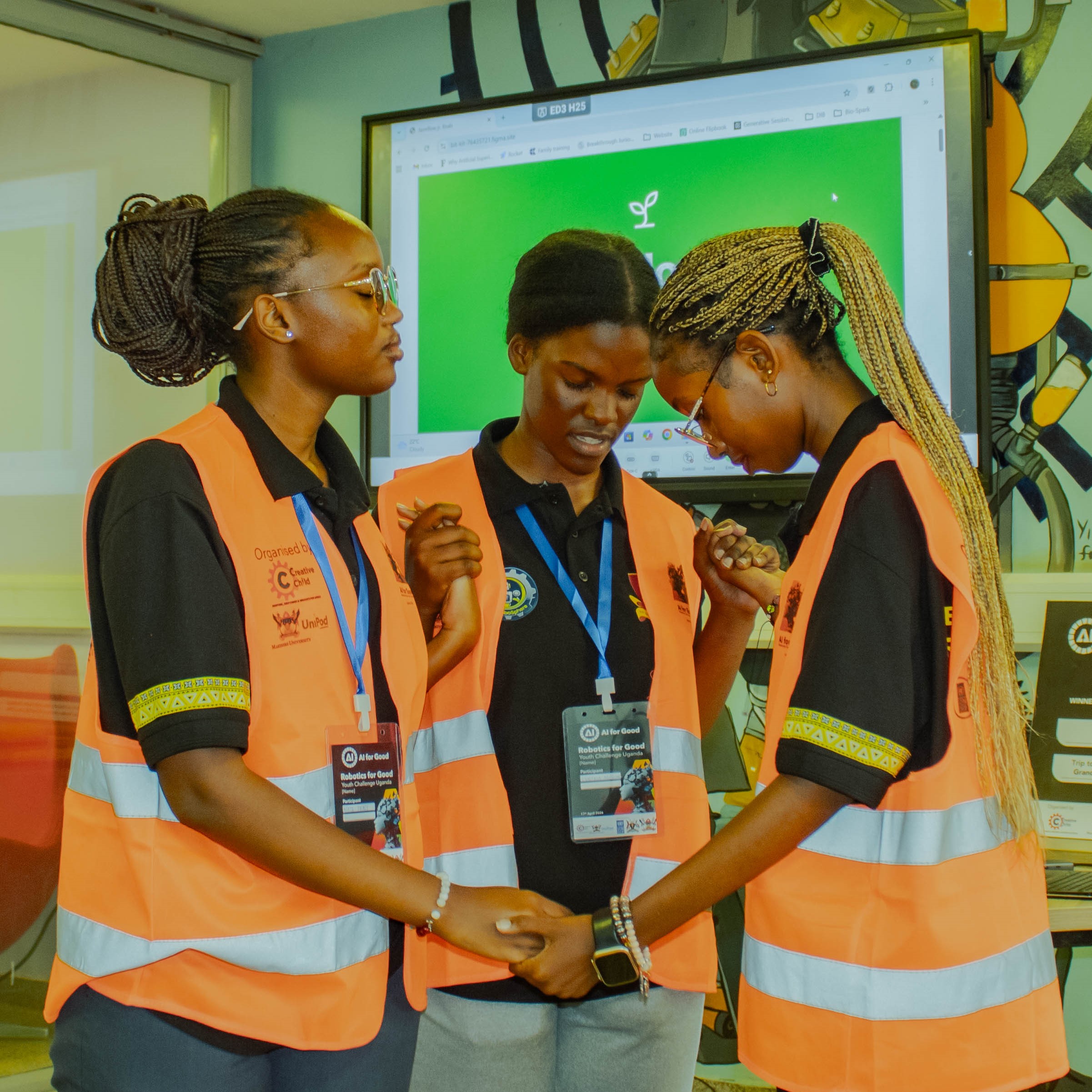
The official 2025/2026 rulebook centred the challenge on agriculture: selective cultivation and irrigation, followed by fruit harvesting and sorting. Matches were autonomous and limited to two minutes. The competition was designed to build engineering, coding, teamwork, problem-solving and future-ready skills.
Teams planted seeds in colour-coded plots and used robots to water seeded plots accurately.
Robots identified and moved ripe and diseased fruit to the correct destinations while avoiding unripe fruit.
The challenge connected autonomous robotics to efficient resource use, sustainable agriculture and food-security thinking.
The 2026 Uganda qualifying tournament took place on 17 April 2026 at Makerere University Innovation Pod & Auditorium, bringing together 40 teams. CCF and ITU materials describe the event as the qualifying tournament toward the global finale in Geneva.
Junior category winners and a standout Uganda innovation story. The team later featured at the AI for Good global stage.
Senior category winners with outstanding performance. Team was unable to participate at global finals due to Visa processing issues.
1st runner-up in the senior category at the national championship, spotlighted for Uganda’s global representation in Switzerland.
Awarded for a high-impact innovation contribution.
Awarded for a food-security innovation contribution.
Awarded for demonstrating that useful robotics can be built with affordability and sustainability in mind.
National competition became a pathway for young innovators to meet peers, judges and mentors on the international stage.
Reserved for mentor/judge interviews and competition moments.
Open YouTube search → Finals • Happy moments-Olive School
 Finals • TRICONA team
 Finalists • Kampala Diplomatic
 1st Runners Up • Senior Category
 School robotics demonstration
 National Champions - Senior category
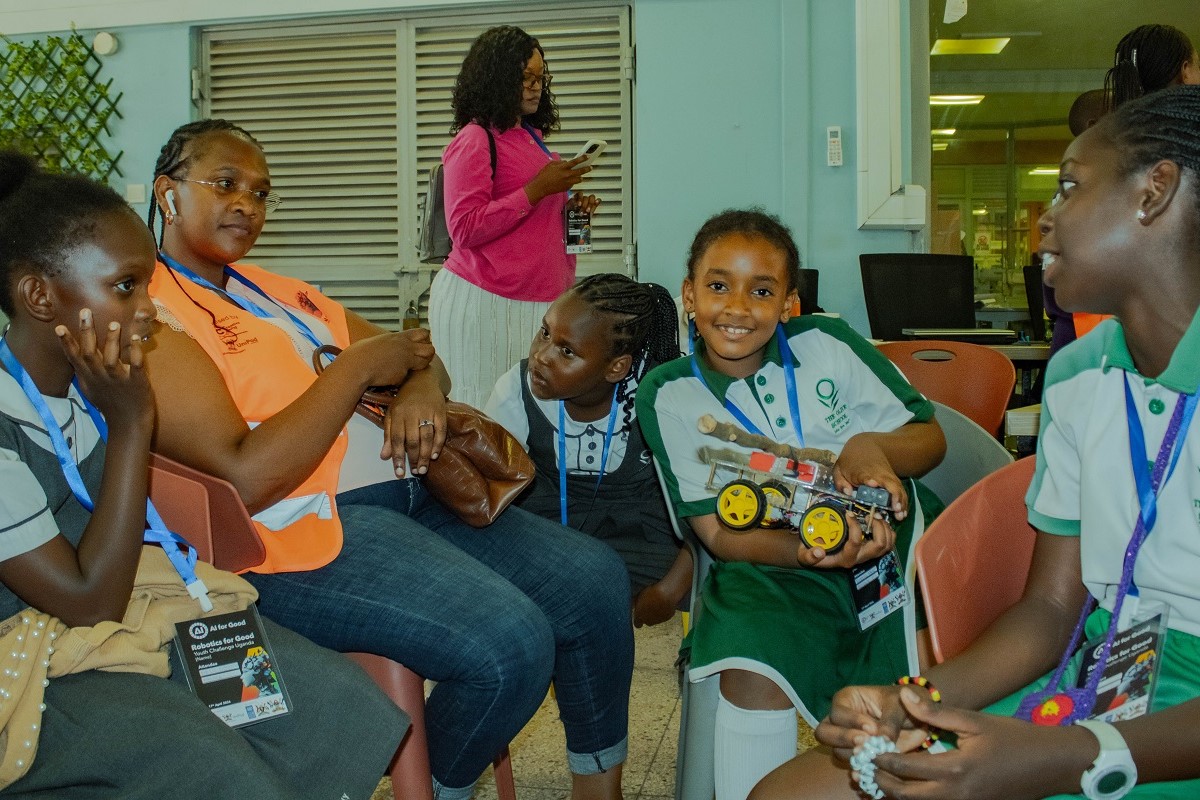 Finalists - Junior category
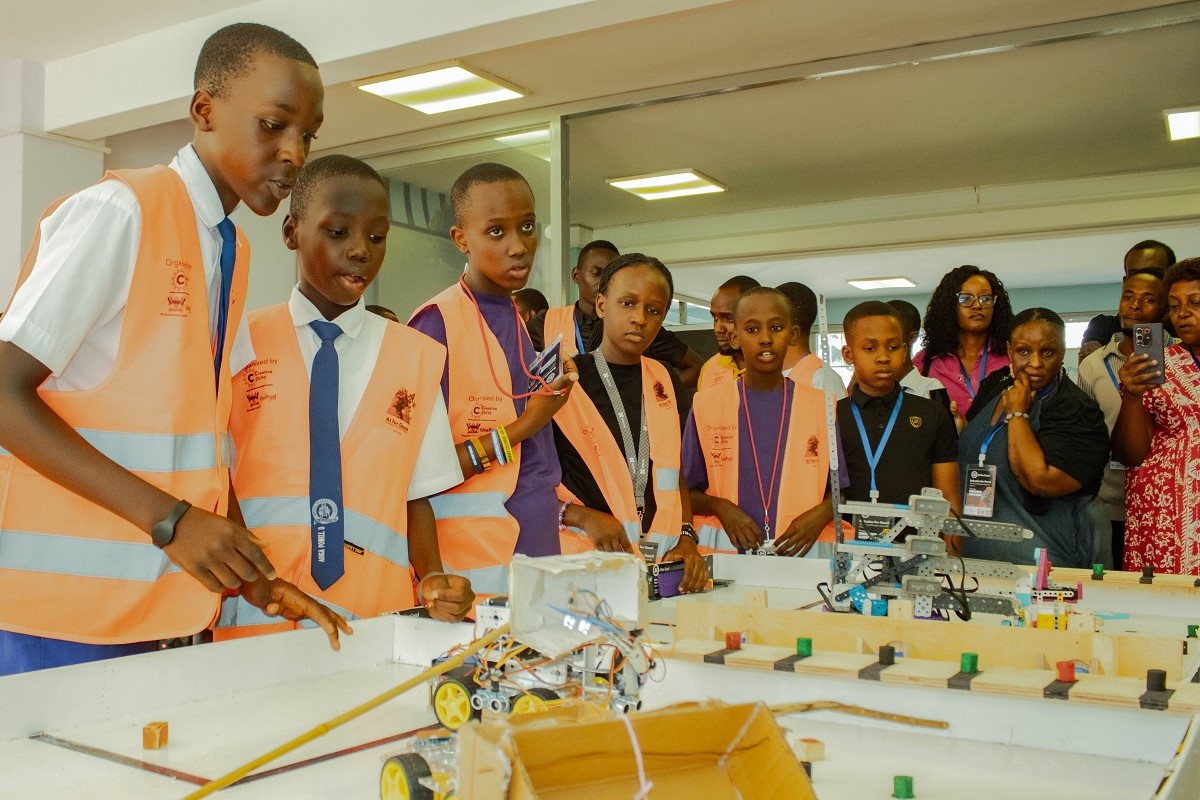 Robots in Action - Finals
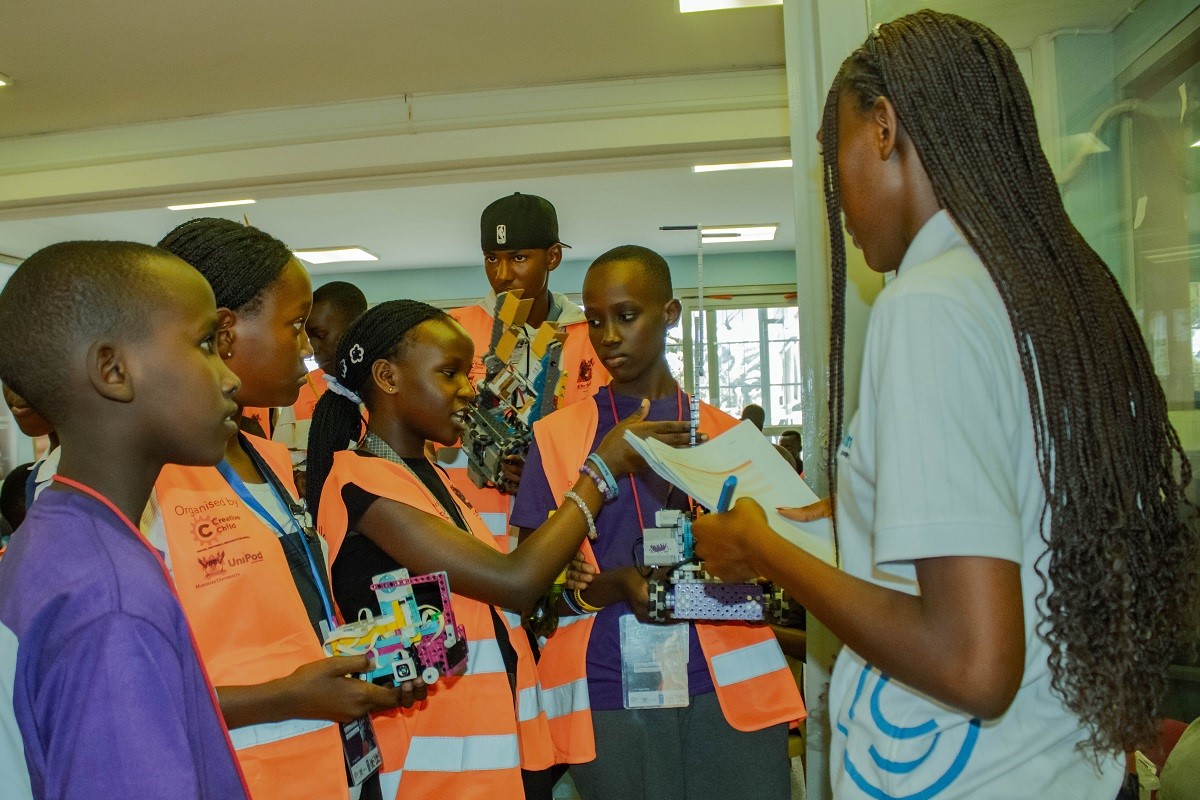 Robot homologation - Finals
 National Champions - Junior category
 Pitch session - Finalists
CCF and AI for Good identify Peak Primary School as Uganda’s Junior pathway team. Peak Schools Ntinda team is comprised of Ellen Samantha Etajak, Ankunda Blessing Bampamya and Ssaka Samuel Elijah.
Strengths: design thinking, coding/systems thinking and hands-on mechanical building.
This archive spotlights King’s College Budo as the senior 1st runner-up and records the requested Uganda global-finals representation journey.
Mentor profile: add the confirmed mentor names, roles and contact details from CCF’s official championship records rather than publishing unverified names.
CCF’s current public post identifies Trinity College Nabbingo as the 2026 senior category champion. This is included so the archive preserves the current public record alongside the Budo spotlight requested for this page.
The official rulebook separates scoring by Junior and Senior category and includes mission points, penalties and a shared bonus. The tables below are a web-friendly summary; the rulebook remains authoritative.
| Action | Pts |
|---|---|
| Correct seed in matching plot | +10 |
| Correctly water seeded plot | +30 |
| Action | Pts |
|---|---|
| Move red/black fruit from circle | +5 |
| Red fruit → Fruits zone | +5 |
| Black fruit → Waste zone | +10 |
| Action | Pts |
|---|---|
| Seed correctly | +5 |
| Seed fully in subdivision | +10 |
| Correctly water seeded plot | +30 |
| Misplaced seed | -5 |
| Rule | Pts / outcome |
|---|---|
| Unauthorized robot interaction | -20 |
| Manipulate field/pieces during round | -20 |
| Hand seeds outside start zone | -20 |
| Robot exits field completely | -20 |
| Both teams complete red/black sorting correctly | +30 shared bonus |
| Serious breach / danger | Possible disqualification |
Hands-on robotics, coding, prototyping and mentor support built readiness.
Teams competed in an autonomous food-security game at Makerere University.
Ugandan finalists joined the international Robotics for Good community in Geneva.
Awards, mentors and exposure turn one competition into a longer innovation pathway.
Global Robotics for Good Youth Challenge organiser and AI for Good ecosystem.
Global platform connecting the challenge to the AI for Good Global Summit.
Uganda innovation and competition ecosystem partner.
CCF's public communications also acknowledge government, UN, education and private-sector stakeholders supporting the wider innovation journey.
The next Uganda edition shifts toward health emergencies and a broader regional pathway. CCF is aiming to reach 50,000 students and expand access to robotics, mentors and competition opportunities.